
Large-Format & Wood-Look Tile: Modern Flooring That Lasts
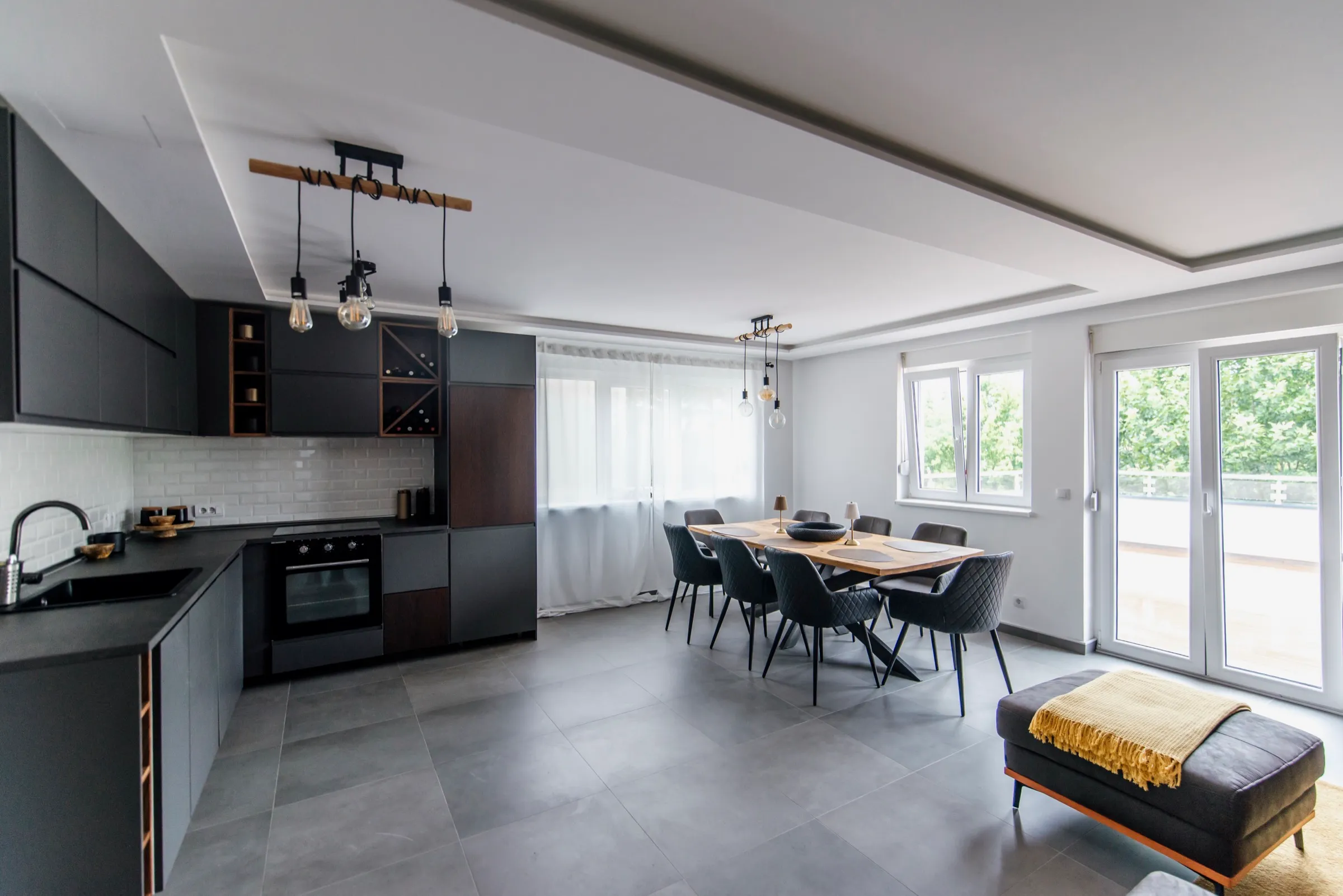
Two of the biggest shifts in flooring over the last decade are connected: tiles have gotten much bigger, and many of them have learned to look like wood. Both trends solve real problems for the way people live now (open floor plans, busy households, indoor-outdoor spaces), and when they’re installed properly, the result is a floor that’s calmer to look at and tougher than almost anything else underfoot. Here’s what to know before you choose.
What counts as “large-format”
In the tile world, large-format generally means any tile with a side longer than 15 inches, and it scales up dramatically from there: 24x24, 24x48, even gauged porcelain panels measured in feet. Wood-look planks are a close cousin: long, narrow porcelain tiles, often 6 to 9 inches wide and 24 to 48 inches long, printed and textured to read like real planks.
Both are usually porcelain, which is what makes them so durable. (If you’re weighing the material itself, our porcelain vs. ceramic guide breaks down why porcelain is the workhorse for floors.)
The case for fewer grout lines
The most visible benefit of going big is grout (specifically, how little of it you see). A floor of large tiles has a fraction of the grout lines of a small-tile floor, and that changes a room in a few ways:
- It looks calmer and bigger. Fewer lines mean fewer visual interruptions, so the floor reads as one continuous surface and a small room feels more open.
- It’s easier to clean. Grout is the part of any tile floor that collects dirt and needs maintenance. Less grout means less of that.
- It’s more contemporary. Minimal grout is central to the clean, modern look most homeowners are after right now.
Wood-look planks deliver the warmth and grain of wood with the water and wear resistance of porcelain, ideal exactly where real wood struggles: kitchens, bathrooms, entries, and homes with kids and pets.
Where each one works best
Large-format tile is at home in open-plan living spaces, kitchens, bathrooms, and entries: anywhere you want a seamless, modern floor. In a smaller bathroom, large-format on the walls (not just the floor) makes the room feel noticeably larger.
Wood-look plank shines wherever you want the feeling of a wood floor without the maintenance: wet rooms, mudrooms, sunrooms, and high-traffic family spaces. It’s also a smart way to flow one warm-looking floor from a living area into a kitchen or bath where real wood would be a liability.
Both are excellent for tile and stone flooring in the busiest rooms of the house, and both hold up beautifully in the indoor-outdoor living so common across Marin and the North Bay.
Installation is where large-format earns or loses its reputation
Here’s the honest part: big tiles are less forgiving to install, and the difference between a great large-format floor and a disappointing one is almost entirely in the prep and technique.
Flatness is everything. Large tiles are rigid and can’t follow a wavy subfloor. Even a small dip that a small tile would hide becomes a visible problem under a big one. The industry standard for substrate flatness gets tighter as tiles get larger, which means more leveling work up front. And that work is non-negotiable.
Lippage control. “Lippage” is when one tile’s edge sits higher than its neighbor; you feel it with a bare foot and catch it in raking light. Big tiles have a slight bow, so installers use leveling clip systems and a proper troweling technique to keep edges flush. Skipping this is the most common cause of a bad large-format floor.
Coverage and grout joints. Large tiles need full thinset coverage under the whole tile (back-buttering is common) so there are no hollow spots that crack later. And those crisp minimal grout joints still need to be the right width. Too tight and there’s no room for the natural size variation between tiles.
Plank-specific layout. Wood-look planks should not be laid in a straight 50% brick offset; the slight bow means a one-third (or random) offset lies flatter and looks more natural, the way real wood does.
None of this is exotic, but all of it requires the right substrate prep, leveling tools, and an installer who’s set a lot of large-format. It’s the clearest example of a material where the install matters as much as the tile.
The bottom line
Large-format and wood-look tile give you a modern, low-maintenance, exceptionally durable floor: fewer grout lines, more open feel, and the warmth of wood in places wood can’t go. The catch is that they reward proper subfloor prep and skilled installation more than smaller tile does. Choose the material for the room, then make sure it’s set on a flat, sound substrate by someone who does this work regularly.
Thinking about a large-format or wood-look floor for your home? Call (415) 482-8453 or reach out here, and we’ll assess your subfloor and help you choose a floor that lasts.